


Time passes. Second by second, day by day. Most of the time, we only notice it when a project is finished, when a month has gone by, or when we suddenly realize that our children have long since grown up. Time flows – and we flow with it. But this is exactly where the problem lies: those who simply drift along lose their ability to shape things. Reflection means interrupting the flow of time in order to see it at all.
Only through conscious reflection does time become tangible. And only what is tangible can be shaped. This time impulse invites you to pause and not only experience your time, but to observe it – as the foundation for a more confident and intentional approach to your most valuable resource.
Why reflection is essential in an accelerated world
You know this too: the day ends, and you wonder where the hours went. Emails answered, meetings completed, phone calls made – but what remains? Often just a vague sense of busyness. The modern working world demands constant presence and continuous responsiveness. We function instead of acting. We react instead of shaping.
Imagine driving through a landscape – but never looking out the window. You arrive, but the journey remains invisible. This is exactly what happens with time that passes without reflection. It exists, it is used up, but it leaves no trace in our awareness. Reflection is the conscious act of stopping to look out the window. It creates distance from what is happening and thereby makes perception possible in the first place.
For people in the second half of life, this ability becomes particularly valuable. You have spent decades in a mode of efficiency – now it is about developing time competence that goes beyond mere productivity. Reflection is not a luxury for the idle, but a tool for those who want to shape their time consciously.
The core problem: time passes unnoticed – and therefore uncontrollably
The paradox of time: it is both ever-present and invisible. We feel its pressure, but we do not see where it flows. Without reflection, time becomes an abstract concept that controls us from the outside. We invest hours in activities without ever questioning whether that investment is worthwhile. We follow routines that are long outdated. We rush through days without noticing that we are going in circles.
The problem is not the speed of our lives, but the lack of awareness. Those who do not reflect on their time cannot evaluate it. And those who cannot evaluate it cannot make conscious decisions. The result: a life on autopilot. Days resemble each other, weeks blur together, years pass – and at some point, the question arises: “Was that it?”
Reflection breaks this cycle. It creates a moment of clarity in which what would otherwise be lost in the stream of events becomes visible. Not in the sense of self-criticism or an urge to optimize, but as an honest inventory: Where was I? What did I do? What fulfilled me? What drained my energy?
These questions sound simple, yet their impact is fundamental. Only when we understand how we actually use our time can we begin to use it differently. Reflection is the mirror that shows whether our time investment aligns with our values – or whether we have long been moving in a direction we never consciously chose.
How to use reflection as a tool for conscious time design
Reflection is not an abstract exercise, but a concrete practice. It requires neither much time nor complicated methods. What it does require is consistency and honesty. Here are five approaches to help you integrate reflection into your daily life:
The daily review: Five minutes for clarity
Take five minutes every evening to review your day. Not as a performance analysis, but as conscious awareness. Which moment had quality? When did you feel driven? This short pause creates distance from events and makes visible what would otherwise fade away overnight.
The weekly reflection: Seeing the bigger picture
Once a week – ideally on Sunday evening – look back on the past seven days. Which activities fulfilled you? Which consumed energy without creating value? Write down three insights. This rhythm sharpens your awareness of patterns and priorities.
The time audit: Honesty about your time investment
Once again, spend a week documenting how you actually use your time – see also Time Impulse No. 2: Track Time. Not to punish yourself, but to gain clarity. The gap between perceived and actual time investment is often significant. This inventory creates valuable insights and forms the basis for conscious change.
The reflection question: A compass for decisions
Develop a personal guiding question that you ask yourself regularly: “Did this hour enrich my life?” or “Would I invest this time the same way again?” This question acts as a filter that separates what matters from what does not.
The analog anchor: Making time visible
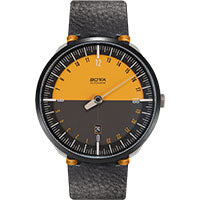
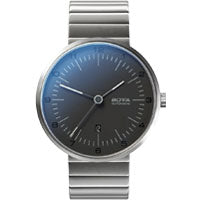
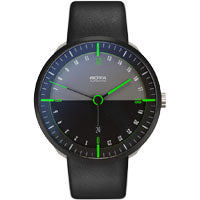
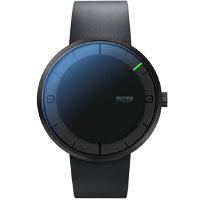
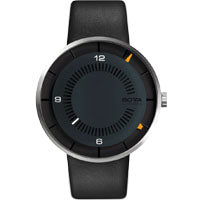
A watch with a clear, reduced display can become a daily reflection impulse. It reminds us that time is not only passing, but also meant to be shaped. A reduced time display that radiates calm instead of creating stress and shows the entire day at a glance changes perception – and thus the way we deal with our own time.
Conclusion: Reflection transforms time from a resource into a space for design
Reflecting on time does not mean controlling it. It means perceiving it. And this perception is the first step toward shaping it. Those who pause gain clarity. Those who have clarity make more conscious decisions. And those who decide more consciously shape their lives – instead of letting them simply happen. Reflection is not a withdrawal from life, but the prerequisite for a self-determined life. Your time is your life. Make it visible.
Subscribe to our newsletter and transform the way you deal with your time. Every 14 days you will receive a new time impulse from our Your-Time principle – practical inspiration for more clarity, confidence, and conscious time design. Because your time is too valuable to pass by unnoticed.