



How Light Shapes Our Mind
Have you ever wondered why you feel more tired on gray winter days, or why bright light in the evening can disturb your sleep? The answer goes deeper than we might think: light does not primarily affect us through conscious vision, but through a highly specialized neurobiological system that is directly connected to our emotional, hormonal, and alertness centers.
In this article, you will learn how light regulates our body’s 24-hour rhythm, how different types of light influence our mental state, and how you can use this knowledge to enhance your well-being.
The Retina: More Than a Sensor for Images
Our retina is far more than a simple “camera sensor.” It is an extension of the brain and contains—besides rods and cones—a third, long underestimated class of light receptors: intrinsically photosensitive retinal ganglion cells (ipRGCs).
These specialized cells:
contain the photopigment melanopsin
are particularly sensitive to short-wavelength blue light (460–490 nm)
respond slowly but in a sustained manner
are not involved in image formation, but in biological regulation
They are the key to understanding why light has such a profound effect on our psyche.

The correct angle of light incidence
For the physiological effects of light, not only the color and intensity of light are decisive, but also the angle at which light enters the eye. Light that reaches the eye at an angle of approximately 0° to 45° above the horizon is particularly effective in regulating our organism. In this range are the photosensitive ganglion cells responsible for the non-visual effects of light, such as regulating the internal clock, hormone balance, and the sleep–wake cycle. Under normal daylight conditions, the correct angle of incidence occurs naturally, allowing maximum effectiveness.
How Light Directly Regulates Our Hormonal System
Unlike the signals for vision, the information from the ipRGCs is not transmitted to our visual cortex (the part of the brain responsible for image processing), but to central areas of the brain that control our biorhythms and emotions: the suprachiasmatic nucleus (SCN) – a small area in the brain, directly behind the eyes. It is our internal master clock that controls the timing of many essential bodily functions.
The SCN is the pacemaker of our circadian (time-of-day-dependent) rhythms. It controls:
the sleep–wake cycle
body temperature
cortisol and melatonin rhythms
Here, light acts as a time cue, synchronizing our internal clock with the natural day–night cycle. A stable SCN rhythm has been shown to be associated with better mood, higher resilience, and clearer thinking.
Melatonin: The Key to Psychological Well-Being
Melatonin is far more than just a “sleep hormone”:
Darkness → increased melatonin production
Light (especially blue light) → suppression of melatonin release
Melatonin influences:
emotional processing
impulse control
anxiety levels
susceptibility to depression
Cortisol: The Natural Activator
Cortisol is released in higher amounts in the morning. It has an activating effect, increases alertness, and prepares the body for the day ahead. It is the natural counterpart to melatonin.
A disrupted melatonin–cortisol rhythm can lead to:
difficulty falling asleep
irritability
rumination
lack of motivation and depressive moods
The 24-Hour Rhythm: Chronobiology and the Perception of Time
Our bodies follow a natural 24-hour rhythm that is largely controlled by the alternation of light and darkness. This rhythm is deeply rooted in our biology and influences virtually all bodily functions.
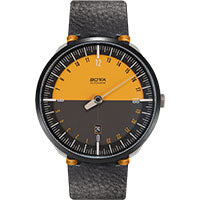
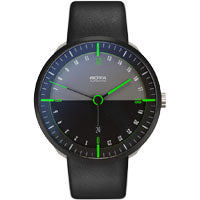
"The human internal clock is designed for a 24-hour day, in perfect harmony with the Earth's rotation,“ explains Klaus Botta, time philosopher and founder of BOTTA. ”This insight inspired us to develop our UNO 24 watches, which represent the day as a complete 24-hour cycle – just as our bodies experience it."

Chronobiological Phases of the Day
Early morning (6–9 a.m.): cortisol rises, alertness begins
Morning (9–12 a.m.): peak concentration
Midday (12–2 p.m.): slight dip in performance
Afternoon (2–5 p.m.): second performance peak
Evening (5–10 p.m.): melatonin production begins
Night (10 p.m.–6 a.m.): deep sleep and regeneration
These phases are mainly synchronized by light. If this natural timer is missing or is disrupted by artificial light at the wrong time, our system gets out of sync—with far-reaching consequences for our mental health.
Serotonin: How Light Lifts Our Mood
In addition to regulating melatonin, light also influences the availability of serotonin, our “feel-good hormone.” Higher light intensity leads to higher serotonin availability, and this effect is particularly pronounced in the morning hours.
This explains:
the mood-enhancing effect of daylight
the effectiveness of light therapy
higher rates of depression and suicide during low-light seasons
Psychological Effects of Different Light Parameters
Intensity
< 100 lux: biologically weak
1,000–10,000 lux: strongly activating
Effects: increased alertness, improved mood, greater stress resilience
Spectrum
high blue content: activating, but problematic in the evening
warm light: calming, melatonin-friendly
Timing
Morning light: antidepressant, structuring
Evening light: can disrupt sleep and emotional balance
Irregular light exposure: promotes emotional dysregulation
Clinical and Psychological Relevance
Disorders of the so-called retinal-hypothalamic light system (consisting mainly of the brightness cells ipRGCs and the internal clock SCN) are involved in numerous mental illnesses:
depression
bipolar disorder
anxiety disorders
ADHD
dementia
“Light is not merely an environmental factor here, but a neurobiological regulator,” emphasizes Klaus Botta. “Similar to how our UNO 24 clocks represent the day as a natural, sun-synchronous cycle, our bodies need a natural light pattern to remain in balance.”
Time and Light: A Natural Connection
The close connection between light and our perception of time is no coincidence. Over millions of years, we have evolved to adapt to the natural rhythm of day and night.
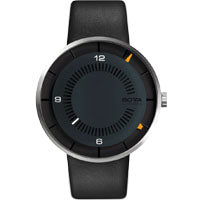
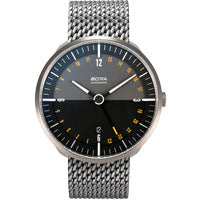
“Our UNO 24 watches reflect this natural passage of time,” explains Klaus Botta. “With just one hand that moves around the dial once every 24 hours, they show time as it actually passes – in sync with the position of the sun and our biological rhythm.”
This way of displaying time corresponds to our natural perception of time and promotes a more conscious, relaxed relationship with time – similar to how natural light promotes our well-being.
Human Centred Lighting – Light Designed for Humans
Human-centered lighting focuses on people and their natural rhythms. Targeted lighting control—energizing light in the morning, calming light in the evening—can significantly increase well-being, concentration, and inner balance. Light thus becomes a silent catalyst for greater clarity and quality of life—entirely in line with our philosophy of time: time is your most important asset.
Practical Tips for Healthy Light Exposure
Based on neuroscientific findings, you can make your everyday life more light-conscious:
15–30 minutes of daylight in the morning
regular daylight breaks
reduce blue light in the evening
warm, dimmed lighting at night
use biologically effective lighting
Conclusion: Light as a Key to Well-Being
The influence of light on our psyche is profound and scientifically well documented. Through specialized receptors in the retina, light directly affects brain regions that regulate mood, hormones, and the sleep–wake cycle.
As Klaus Botta puts it: “Humans feel light before they see it.” By consciously managing light and time, we can improve our quality of life.
Just like the UNO 24 watches by BOTTA, which reflect the natural 24-hour rhythm, we can structure our daily lives in harmony with our internal clock—resulting in more energy, better mood, and healthier sleep.
FAQ: Frequently Asked Questions About Light and Mental Health
How can I combat seasonal depression with light?
Daylight lamps with 10,000 lux used for 30 minutes in the morning can significantly alleviate symptoms of seasonal depression. Consult your doctor before use, especially if you have bipolar disorder.
What effect does night work have on the biological rhythm?
Night work severely disrupts the melatonin–cortisol rhythm. Mitigation strategies include specialized light glasses during night shifts, consistent blackout during daytime sleep, and regular sleep schedules on days off.
How does blue light from screens affect sleep?
Blue light suppresses melatonin production and can delay sleep by up to three hours. Use blue light filters or night mode from late afternoon onward and avoid screens 1–2 hours before bedtime.
Can light help treat non-seasonal depression?
Yes. Light therapy also shows positive effects in non-seasonal depression, especially when combined with conventional treatments. Morning exposure to daylight or therapeutic light can increase serotonin availability.
How does light influence learning and concentration?
Bright, slightly bluish light (similar to daylight) has been shown to improve alertness, concentration, and cognitive performance. Optimal learning conditions are 1,000–1,500 lux with a slightly increased blue component during morning hours.
Would you like to learn more about the connection between time, light, and well-being?
Discover the 24-hour watches by BOTTA, designed to reflect the natural 24-hour rhythm and promote a more conscious experience of time.
Learn more about the UNO 24 collection.

2 comments
Sehr interessant, ich habe vorher schon einiges gelesen wieviel Einfluss Licht auf die Psyche und Gesundheit des Menschen hat.
Das sind gute Erkenntnisse die sehr kompakt erklärt sind.
Herausfordernd sehe ich es im Umgang mit dem eigenen Biorythmus in unserem Bildschirm und Handyzeitalter.
Ich finde das Bilmaterial hilft gut um es zu verstehen.
Danke für diese Erklärung. Ich werde mein Lichtdenken verbessern.DH
Ein sehr informativer Artikel. Einiges wusste ich schon aber das meiste war tatsächlich neu für mich. Ich habe jetzt tatsächlich einen neunen Blick auf das Licht und seine psychische Wirkung auf uns Menschen. Sehr umfassend und kompetent geschrieben und dabei wirklich gut verständlich. Auch die verwendeten Bilder dienen der Anschaulichkeit. Vielen Dank für die nützliche Information. Ich werde einiges davon direkt umsetzen. M.S.