

Better: Backgrounds, Analyses and Perspectives on an Important Seal of Origin
We live in a world where production processes are globally interconnected and manufacturing steps are often distributed across several continents. This raises the question: What does “Made in Germany” still mean today? Is it a genuine promise of quality or merely a marketing label without substantial value? This article examines the current significance of this traditional seal, traces its development, and explains why authentic craftsmanship and innovative German engineering continue to enjoy a special reputation.
The Historical Development: From Stigma to Quality Seal
What many people do not know: “Made in Germany” was originally not a promise of quality, but a warning label. At the end of the 19th century, Great Britain introduced this designation to “protect” British consumers from supposedly inferior German products. However, history took an unexpected turn.
German manufacturers responded to this challenge with a consistent quality offensive. They invested in education, research and development, and established strict production standards. Within just a few decades, the meaning of the label fundamentally changed: from stigma to internationally recognized seal of quality, standing for precision, durability and technical innovation.
Made in Germany in 2026: Its Current Meaning
In today’s globalized economy, the definition of “Made in Germany” has evolved. Legal requirements merely state that the “essential manufacturing process” or the “last economically significant processing step” must take place in Germany. This leaves considerable room for interpretation.
The reality often looks like this:
- Many components are sourced internationally
- Pre-assembly frequently takes place in low-wage countries
- Only final assembly and quality control are carried out in Germany
- Design, development and conceptualization usually remain in Germany
This development has partially shaken trust in the label. According to a recent study by the German Institute for Retail Research in 2025, however, 78% of international consumers still associate “Made in Germany” with above-average quality and reliability.
The Three Pillars of Genuine German Craftsmanship
What defines authentic German workmanship today can be traced back to three core elements:
1. Craftsmanship and Precision
German craftsmanship tradition is based on the master craftsman principle — a system that ensures continuous transfer of knowledge and quality assurance. Especially in precision industries such as watchmaking, this is evident in:
- Exact material processing down to the micrometer range
- Meticulous surface treatment and finishing
- Precise assembly of complex components
- Comprehensive quality control across multiple production stages
2. Innovative Engineering
The combination of traditional craftsmanship and modern engineering creates unique competitive advantages:
- Continuous improvement of existing technologies
- Integration of the latest scientific findings
- Development of patented solutions for complex challenges
- Consistent optimization of materials and processes
3. Design Expertise and Conceptual Depth
What particularly distinguishes German products is the connection between functionality and thoughtful design:
- Clear, long-lasting design language instead of short-lived trends
- Function-oriented design without unnecessary elements
- Profound concepts with philosophical depth
- Human-centered design approach in the tradition of the BAUHAUS
Case Study: German Watchmaking at BOTTA
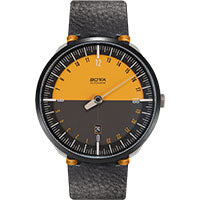
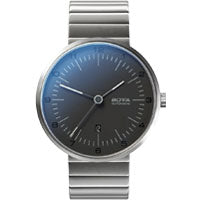
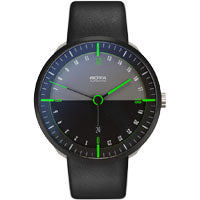
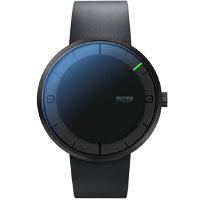
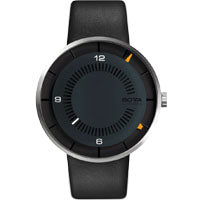
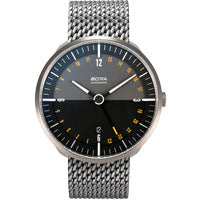
A prime example of authentic “Made in Germany” is the watch manufacturer BOTTA in Königstein near Frankfurt. Since its founding in 1986 by Klaus Botta, the company has been dedicated to combining innovative design, technical precision and artisanal excellence.
At BOTTA, “Made in Germany” manifests itself in all phases of value creation:
- Concept and Design: Every watch originates from a clear conceptual idea — such as the revolutionary single-hand watch, developed in 1986 as a counter-design to digital overstimulation.
- Material Selection and Processing: The use of Tri-Titanium cases, combining three different titanium alloys for optimal performance, demonstrates material expertise.
- Technical Innovation: Patented solutions such as the Reflect-Lume system for subtle nighttime readability or the Inverted-Lug system for improved ergonomics reflect the innovative spirit.
- Precision Manufacturing: The highly precise machining of case components is carried out on state-of-the-art CNC machines in Germany, operated by experienced specialists.
Quality Control: Each watch passes through several inspection stages before leaving the facility — from water-resistance testing to final optical inspection.
The Challenges Facing “Made in Germany”
Global Value Chains
The reality of global production networks makes it difficult to clearly define the “German share” of a product. Where does “Made in Germany” begin and end when raw materials, components and partial processes are sourced internationally?
Cost Pressure and Competition
German manufacturers face enormous cost pressure. High labor and energy costs in Germany lead many companies to relocate production steps abroad in order to remain competitive.
Skilled Labor Shortage
Demographic change and declining interest in skilled trades have led to an acute shortage of qualified professionals. According to the German Chamber of Crafts, more than 25,000 skilled workers were lacking in the German precision trade sector in 2025 alone.
Sustainability as a New Requirement
Modern consumers expect not only quality, but also ecological and social sustainability. Today, “Made in Germany” must also stand for resource-efficient production and fair working conditions.
Why “Made in Germany” Will Remain Relevant in the Future
Despite all challenges, there are strong reasons why this quality seal will retain its significance:
Trust in Times of Crisis
In uncertain times, consumers seek reliable values. Products with proven quality and durability gain importance — characteristics traditionally associated with “Made in Germany.”
Counter-Movement to the Throwaway Society
The trend toward sustainable, long-lasting products strengthens the position of German manufacturers, who traditionally emphasize durability and repairability. A high-quality watch manufactured in Germany can last for decades — a compelling argument in times of growing environmental awareness.
Technological Leadership
In many areas of high technology, Germany maintains its leading position. From precision mechanics to advanced materials, German engineering remains a driving force of innovation.
Authenticity and Transparency
In an environment of mass-produced and interchangeable products, demand for authenticity is growing. Manufacturers who communicate transparently about their production processes and demonstrate genuine craftsmanship earn consumer trust.
The Future of “Made in Germany”: Redefining Quality
The future of the quality seal lies in a redefinition that goes beyond mere geographic origin:
From “Made in” to “Engineered in”
Many German companies emphasize that real value creation lies in development, design and conceptual thinking — regardless of where physical production takes place. “Engineered in Germany” is increasingly viewed as a more honest alternative.
Transparency Instead of Origin Promises
Instead of vague origin claims, forward-thinking companies focus on full transparency within their value chain. They openly communicate where components originate and where specific manufacturing steps are carried out.
Quality as a Holistic Concept
The new definition of quality includes not only technical perfection, but also durability, repairability and ecological sustainability — values deeply rooted in German production tradition.
Conclusion: The Enduring Value of German Engineering
“Made in Germany” is more than a label of origin — it is a promise. A promise that stands for well-conceived concepts, technical precision, craftsmanship and long-lasting quality. In a time when production steps are globally distributed, the true value lies not solely in geographic origin, but in conceptual depth, design excellence and technological innovation.
Companies such as BOTTA Design demonstrate that authentic “Made in Germany” is still possible today — when the entire value chain, from idea to finished product, is shaped by German engineering and craftsmanship. This fusion of tradition and innovation, of artisanal precision and forward-thinking concepts, defines the lasting value of the quality seal.
In a world of short-lived trends and rapid product cycles, “Made in Germany” remains an anchor for quality, reliability and thoughtful design — a promise that goes far beyond mere origin labeling.
FAQ: Made in Germany
What does “Made in Germany” legally mean?
Legally, the “essential manufacturing process” or the “last economically significant processing step” must take place in Germany. The exact definition, however, remains debated and is interpreted differently across industries.
How can I recognize genuine German craftsmanship?
Look for transparency in the manufacturer’s communication. Reputable companies provide detailed information about their manufacturing processes, materials and quality controls. Certifications such as the RAL quality mark or industry-specific seals can also help.
Is “Made in Germany” more expensive than comparable products from other countries?
Generally yes, as higher labor and production costs in Germany are reflected in the final price. However, the price difference often becomes relative due to the longer lifespan and better repairability of German quality products.
Which industries are particularly associated with German quality?
Traditionally, mechanical engineering, the automotive industry, precision instruments, optics and certain areas of consumer goods — such as high-quality watches — are especially known for the strong reputation of “Made in Germany.”
How important is “Made in Germany” for international purchasing decisions?
Studies show that the label remains an important buying factor, particularly in Asia, the Middle East and North America. In a 2025 survey, 65% of international buyers stated that they would accept a price premium of up to 20% for a product labeled “Made in Germany.”
About the Author
Klaus Botta, expert in product design and product development, has been active in this field for 40 years and has advised companies for over 15 years on optimizing production processes and authentically communicating quality promises.
Would you like to learn more about authentic German engineering? Discover the world of precision timepieces and see how BOTTA unites tradition and innovation. Visit our production page and experience German perfection firsthand.