

When the Sun Stands Still: A Solar Eclipse and the Art of Truly Experiencing Time
On Wednesday, August 12, 2026, the sky over Germany will darken. A partial solar eclipse is approaching. The Moon will move between the Earth and the Sun, the light will grow dimmer, the shadows softer, and the temperature will drop slightly. Something in the body immediately registers that the familiar rhythm has changed. This brief moment of hesitation is not a disruption. It is a moment of genuine time awareness – exactly the kind of experience our everyday lives rarely allow.
The Sun: Humanity’s Oldest Timekeeper
Before there were dials, hands, or atomic clocks, people oriented themselves by the Sun. Its position in the sky determined when people worked, ate, and slept. The rotation of the Earth around its own axis remains the physical basis of our sense of time to this day. Not the second, but the Sun.
If we think about it more closely, we intuitively sense what has been lost along the way. Digital devices tell us the exact time down to the second. Calendars organize our hours into fifteen-minute blocks. The result: We always know what time it is, yet we hardly feel time passing. Our perception of time and our measurement of time have drifted apart. Every person has exactly 24 hours in a day. No more, no less. And yet it rarely feels that way.
The solar eclipse on August 12 makes this difference physically tangible for a brief moment. Suddenly, time is no longer an abstract number, but a physical experience. A sense of time synchronized with the Sun: this is not romanticism, but the most fundamental form of human orientation.
How to Make the Most of the Moment
Observe the eclipse consciously and without distraction. Put your smartphone aside. Three to five minutes of genuine presence can do more for your sense of time than any productivity app. We promise.
Use the day as a personal moment of reflection. For thousands of years, astronomical events have served as markers of transition. Ask yourself: Who does my time really belong to right now?
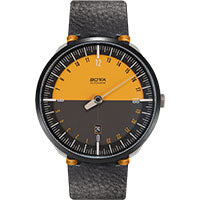
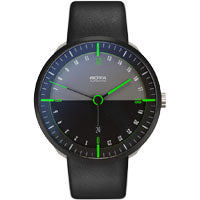
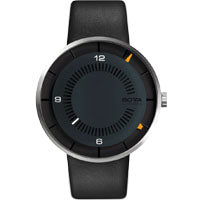
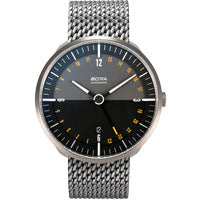
Choose tools that make time tangible, rather than merely measurable. A BOTTA one-hand watch such as the UNO 24 shows you the approximate time of day, reflecting the natural progression of the Sun across the sky. Impressive in its reduction, inspiring in its clarity. Reducing complexity is the new luxury of our time.
It’s a Matter of Perspective
The solar eclipse lasts only a few minutes. But the impulse it creates can have a lasting effect. Our perception of time is not a question of precision, but of perspective. Your time is your life. Your most valuable resource.
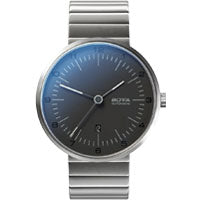
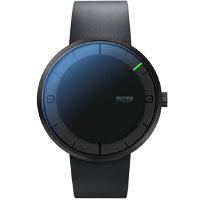
At BOTTA, we have been developing exceptional watches since 1986 – Made in Germany, with unconventional design inspired by Bauhaus values: sustainable, durable, and consistently focused on people. Discover on our website which BOTTA timepiece best matches your personal philosophy of time.