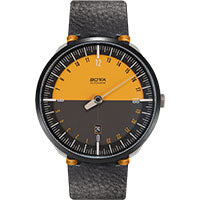
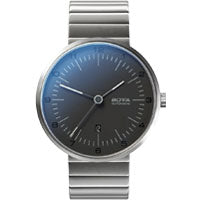
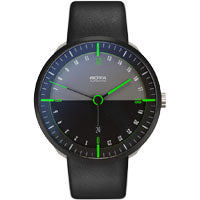
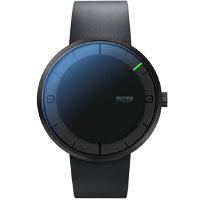
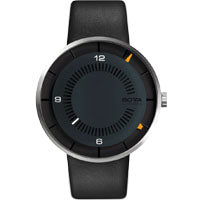



A handle invites you to grasp it. A matte surface signals a secure grip. A black, radically reduced case speaks a different language from a chrome-plated, ornately designed one. Products communicate with us constantly – without using a single word. Design theory refers to this silent yet powerful form of communication as product language. It describes how objects convey meaning and influence our behavior through their form, material, proportions, and surface.
For anyone who designs products or selects them consciously, understanding this “language of things” is essential. Good design does not happen by chance – it follows principles that have been researched and refined for decades.
Why products are more than functional tools
For a long time, products were regarded primarily as carriers of function: a kettle heats water, a chair supports the body, and a watch tells the time. However, this technical perspective does not go far enough. People do not simply use products – they understand them, categorize them, and evaluate them emotionally and socially. A product is not only used; it is also read.
This insight was particularly influential in the development of the so-called Offenbach Approach, which emerged at the Offenbach University of Art and Design during the 1970s and 1980s. The focus shifted from the product as an isolated object to the relationship between people and objects. Products were understood as carriers of information and meaning – as objects that affect us through our senses and are processed psychologically.
Design theorist Jochen Gros defined product language as the relationships between people and objects that arise through our channels of perception. Product language is therefore not identical to technical function. Instead, it concerns the perceptible and interpretable aspects of a product: what we see, touch, hear, or infer from its form.
A simple example illustrates this point: a kettle may function perfectly from a technical perspective and still be designed in a confusing way. Conversely, an object may “speak” attractively but function poorly. Good design must bring both aspects together – and this is precisely where the relevance of product language within design theory lies.

The three levels of product language
Classical Offenbach theory organizes product language clearly and systematically. It distinguishes between formal-aesthetic functions and sign functions. Sign functions are then divided into indicative functions and symbolic functions. This three-part structure continues to form a foundation of professional design education and practice.
Formal-aesthetic functions
Formal-aesthetic functions concern the form itself: proportion, rhythm, structure, the effect of materials and colors, and the character of surfaces. Jochen Gros compared this level to the grammar of language – it is not simply “meaning” in the narrower sense, but the formal order that makes meaning coherent in the first place.
Formal aesthetics answers questions such as: Does a product appear calm or restless? Precise or arbitrary? Heavy or light? This level is not merely decorative, but forms the structural basis of expression.
Indicative functions
Indicative functions are those characteristics that provide users with information about a product’s use, function, and operation. A button signals that it can be pressed, a recess invites the user to grip it, and a matte rubber surface promises a secure hold.
In contemporary terminology, this level is closely related to what is discussed in UX and interface design as affordances or self-explanatory design. The central question is: Does the product show what it is and how it should be used?
Symbolic functions
Symbolic functions do not concern immediate use, but rather the cultural, social, historical, or emotional meanings of a product. A product can express status, technical expertise, sustainability, purism, tradition, or an avant-garde attitude.
A mechanical timepiece with a visible movement aesthetic communicates something different from a smooth, hermetically sealed smartwatch. Symbolism is therefore never merely an additional feature, but part of the social impact of design.
Product language as part of nonverbal communication
In a broader sense, product language belongs to the field of signs and systems of meaning. It should not be equated with spoken language, but it can be understood as a form of nonverbal, object-based, predominantly visual, and often tactile communication. Communication research generally distinguishes between verbal and nonverbal forms – and product language clearly belongs to the latter category.
The term “language” is used metaphorically here. Products do not form a language in the linguistic sense, such as English or French. However, they function in a similar way because they work with signs, conventions, expectations, and meanings.
This is precisely where product language intersects with semiotics – the general study of signs and sign systems. Ferdinand de Saussure described semiotics as the study of the “life of signs within society.” Charles Sanders Peirce distinguished between icons, indices, and symbols. This semiotic perspective is central to product language because product forms also function as signs.
Product language can be located precisely at the intersection of design theory, semiotics, perception theory, and communication studies. Within design theory, it describes the specific contribution made by design. Within semiotics, it is a particular form of sign process. Within communication studies, it is a form of nonverbal or multimodal communication. And within design practice, it is the instrument used to make products understandable, distinctive, and culturally relevant.
Put differently: technology determines whether something works. Ergonomics determines whether it can be used comfortably by the human body. Product language determines how it communicates with people and what it means in the process.

Practical significance for designers and users
The theory of product language is not a historical curiosity. The Offenbach University of Art and Design explicitly emphasizes that it continues to be taught and discussed today. At the same time, its field of application has expanded: product language now applies not only to traditional industrial products, but also to interfaces, digital devices, connected objects, and brand identities.
International debates surrounding product semantics and the “Semantic Turn” described by Klaus Krippendorff reflect the same development: a move away from a purely technology-centered perspective and toward an examination of the meanings that artifacts acquire for people. The Offenbach University of Art and Design describes this as working with a nonverbal repertoire, the conscious use of which is an important objective of design education.
Why is this relevant? Because products are not only used – they are also understood, misunderstood, desired, rejected, categorized, and evaluated. A handle can invite or confuse. A surface can create trust or distance. A case can signal robustness, precision, restraint, or luxury.
Product language therefore fulfills at least four central functions:
- It helps people understand a product.
- It supports intuitive operation.
- It enables social and cultural categorization.
- It shapes the aesthetic experience.
This expansion of functionalism is a core element of the Offenbach Approach – and it makes products not only functional, but also readable, usable, and meaningful.

Conclusion
Product language is the dimension of meaning within a product. It describes how products communicate with people through form, material, surface, proportion, signs, and symbolism. In classical Offenbach theory, it is divided into formal-aesthetic functions and sign functions, which are in turn divided into indicative functions and symbolic functions.
Within the broader field of language, product language can be categorized as a nonverbal, object-based, and predominantly multimodal form of communication.
It therefore occupies a position between design, semiotics, and communication studies – and this is precisely why it is essential to good design. Anyone who designs products or selects them consciously benefits from a well-founded understanding of this silent yet powerful language of things.
Thoughtful product language at BOTTA
Would you like to learn more about thoughtful design? Discover how BOTTA has consistently applied the principles of product language since 1986 – with watches characterized by clarity, logic, and a reduced formal language.