

UNO Edition 40: When a Design Classic Was Ahead of Its Time
The UNO wristwatch, the first modern one-hand watch, celebrates its 40th anniversary in 2026. What began in 1986 as a deliberate counterpoint to increasing sensory overload feels more relevant today than ever. The original embodies an attitude that our time often lacks: the art of reduction as an answer to constant overwhelm.
Slowing Down Through Design: Why Less Is More
Four decades ago, Klaus Botta developed the UNO from a clear conviction: time should not be experienced more precisely, but more consciously. The one-hand watch followed a radically different idea.
Imagine looking at your wrist and seeing not three hands circling restlessly, but a single, calm time indicator. No seconds rushing you. No distraction from unnecessary information. Only the essential: the approximate time, which is entirely sufficient for shaping your day consciously.
The consistently reduced one-hand display does not make time less accurate. It makes it more understandable — and therefore more human. Those who protect their attention gain quality of life.
The Answer Lies in Reduction
Since 1986, the density of information has reached a level that would have been almost unimaginable at the time. Smartphones, notifications, constant availability: our attention is fragmented within fractions of a second.
This is precisely where the original comes in. The calm, consistently reduced display of the one-hand watch is not a nostalgic return to the past, but a contemporary answer to modern challenges. It represents a self-determined way of dealing with one’s own time.
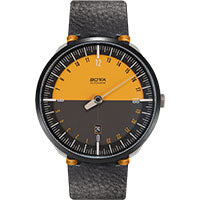
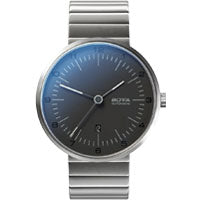
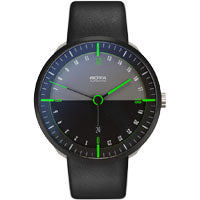
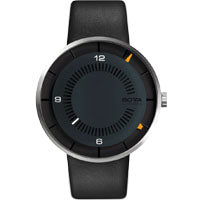
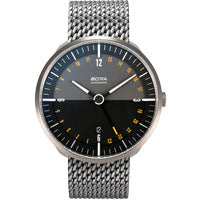
The UNO Edition 40 carries this idea forward with consistency. Instead of numerous minute markers, each hour is divided only into four quarter-hour sections. This makes reading the time even more intuitive and gives the dial exceptional calm and clarity.
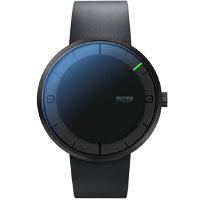
The color variants Mango Orange and Cornflower Blue emphasize this character with confident lightness. These design classics are more than anniversary watches: they are statements for slowing down in an accelerated world.
How a One-Hand Watch Changes Your Perception of Time
The UNO offers concrete benefits for everyday life:
Visual relief: The reduced display lowers cognitive load. You grasp the approximate time at a glance. After two to three days, reading it becomes intuitive.
Protection from second-by-second stress: Without a seconds hand, the constant feeling of working against time disappears. You gain a more generous perspective on your day.
Intuitive time reading through a single hand — the hour hand: The absence of a minute hand further enhances the sense of slowing down. You read time in natural quarter-hour intervals, just as we use them in everyday speech: “around half past two,” “shortly before four.” This intuitive perception of time is far closer to our human sense of time than the hectic precision of reading every minute.
An authentic conversation starter: A one-hand watch sparks curiosity. It positions you as a reflective individualist who makes conscious decisions.
Long-term value retention: The timeless design remains relevant for decades. The quality of the materials and the Swiss movement ensure lasting durability.
Philosophical added value: Every glance at the one-hand watch reminds you that your time is your life. This subtle daily ritual encourages a more conscious approach to your most valuable resource.
Conclusion: An Intelligent Design Classic, More Relevant Than Ever
The UNO one-hand watch was ahead of its time in 1986 and is more relevant today than ever before. The original stands for the art of reduction, for a self-determined approach to one’s own time, and for the courage to question conventions.
Experience for yourself how a one-hand watch can change your perception of time. Discover the UNO Edition 40 and other BOTTA design classics in our online shop. Every watch comes with a 30-day return policy and a lifelong service promise. Your time deserves an instrument that honors it — not merely measures it.